Last Updated on March 24, 2026 by Arlena Whitford
Dog allergy symptoms in humans affect millions, and honestly, I’ve lost count how many times owners miss them. That itching and sneezing isn’t just a nuisance—it’s your body waving a red flag. If you’re reacting to a dog, you’re far from alone. Let’s walk through the five clinical signs I see people downplay every single day. Managing this isn’t just about your relief; it helps protect pets from the stress that can worsen their own skin and hormonal issues. Truth is, understanding this mess is the first step to fixing it.
Anyway, protocols to mitigate these sensitivities usually get folded into daily routines, like cleaning and monitoring. Consistency is key, but it’s a grind. You have to watch for changes, because reactions can shift when you least expect it.
At-a-Glance: Clinical Summary
Sneezing Isn’t Just Annoying — It’s a Signal
Sneezing is usually the first clue. Inhale those pet dander particles, and your immune system mounts an overzealous defense, releasing histamines that trigger the sneeze reflex. Look, it’s more than a petty irritation. It’s a clear sign of a heightened sensitivity. From what I’ve seen in practice, ignoring this can let reactions snowball into something far more stubborn — I had a client whose chronic sinus infections cleared up only after they finally addressed the old dander in their ducts.
The Itchy, Watery Eye Dilemma

Itchy eyes almost always tag along with sneezing. Histamine release inflames the conjunctiva, causing that maddening gritty, watery feeling. Allergy drops offer a passable temporary fix. But persistent symptoms? That’s your cue to seriously reevaluate your environment. I’ve had clients who swapped carpets for hard floors and saw a dramatic difference, it’s one of those pivots that gets overlooked. For expert advice on managing dog eye allergies, check out what can I give my dog for eye allergies.
A Quick Note on Contact
Rubbing your eyes after petting a dog can deliver a concentrated dose of allergens from saliva right to the most sensitive tissue. Basically, wash your hands first.
Coughing: Your Respiratory System’s Alarm Bell
Coughing is a protective reflex, plain and simple. It’s your airways trying to evict an irritant. A nagging, chronic cough suggests allergens are persistently aggravating your throat and bronchial tubes. Truth be told, you need to rule out other conditions with a doctor. Letting it go can lead to more entrenched respiratory hassle.
Skin Reactions: More Than a Rash

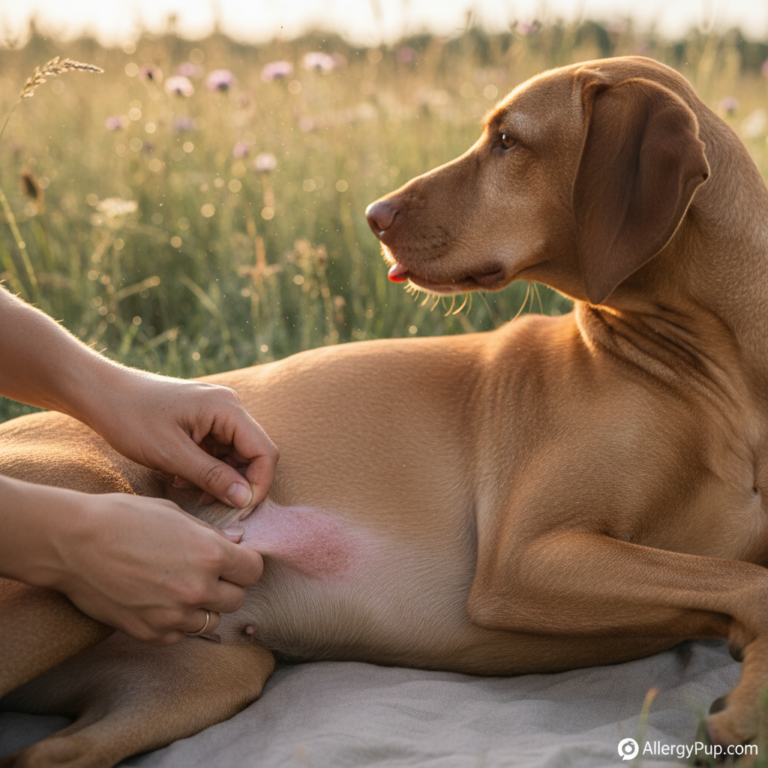
Direct contact can sometimes spark skin reactions like hives. These raised, red welts are a classic histamine flare-up. They range from a minor itch to a truly gnarly ordeal. Oral antihistamines or topical creams can douse the fire short-term. Long-term, though? You have to lower the allergen load. There’s no way around it. Seen a kid break out in welts just from a dog licking his arm — saliva is a potent trigger. A practical approach to managing skin symptoms is available in the post about natural dog allergy treatment solutions.
Wheezing: The Canary in the Coal Mine
Wheezing—that high-pitched whistling on exhale—means airways are narrowing. It’s an alarming, severe response. This isn’t just allergies; it’s bordering on an asthma-like reaction. Immediate medical attention is non-negotiable. If you experience this, monitoring your environment becomes imperative. Old allergens in upholstery or HVAC systems can be a pervasive trigger here, believe me. For targeted help, see the solutions for dog allergy wheezing relief.
So, Where Are These Allergens Actually Coming From?

Dog allergens are stealthy. They’re proteins primarily found in skin flakes (dander), saliva, and urine. A new pet introduces them, but old allergens linger for months in dust, carpets, and vents. Maintaining a clean space is clinically undervalued. HEPA filters help capture airborne particles, and bathing your dog weekly can reduce the dander load they shed. But here’s the thing: no strategy is 100%.
Clinical Implications
Mitigating Your Allergic Responses
Here are the strategies I’ve seen work reliably, though they require some headache.
- Consult an Allergist. Specialized testing cuts through the guesswork. It’s the most direct path to a personalized plan.
- Clean with a Strategy. Vacuum carpets with a HEPA-filter vacuum frequently. Wash bedding—yours and the dog’s—in hot water weekly. It’s boring, but it works.
- Deploy Air Purifiers. Place HEPA air purifiers in the rooms you use most. Choosing the right option is simplified in the guide on choosing a pet allergy air purifier.
- Create a Pet-Free Zone. Keep dogs out of your bedroom, at minimum. It gives your immune system a few hours of true respite each day.
- Medications are a Tool. Over-the-counter antihistamines can ease symptoms. For stubborn-as-hell inflammation, prescription options from your doctor can be a game-changer. They’re a piece of the puzzle, not the whole solution.
Owners hate hearing this, but it’s a series of adjustments. Simple as that. Really.