Last Updated on April 29, 2026 by Arlena Whitford
Demodex dogs are dealing with mites that trigger gnarly hair loss and skin lesions—up to 90% of affected canines show significant discomfort. That persistent itching, those unsightly patches, the helpless feeling when you’ve tried everything and nothing’s sticking? I’ve seen it hundreds of times. So let me lay out five underappreciated insights on identifying, treating, and managing demodex dermatitis in dogs. Trust me, some of this will save you weeks of guesswork.
Dog owners often seek information on Demodex due to the prevalence of this condition in certain breeds and the challenges associated with its management. Typically, management protocols are integrated into daily pet care routines to monitor symptoms, including regular grooming and environment cleaning. Consistency in monitoring symptoms is a standard practice for effectively managing canine sensitivities. Boring but true—those routines are all that stands between a clear coat and another flare-up.
At-a-Glance: Clinical Summary
Understanding Demodex Lesions in Dogs
What are Demodex Mites?

Demodex mites are microscopic ectoparasites that live in dogs’ hair follicles. Usually harmless—they hang out in low numbers, no big deal. But when they overgrow? You get Demodicosis. Frustratingly common in young dogs or those with compromised immunity.
Most affected breeds? Bulldogs, Boxers, Shih Tzus. Basically the ones already prone to skin drama anyway.
How Do Demodex Lesions Present?
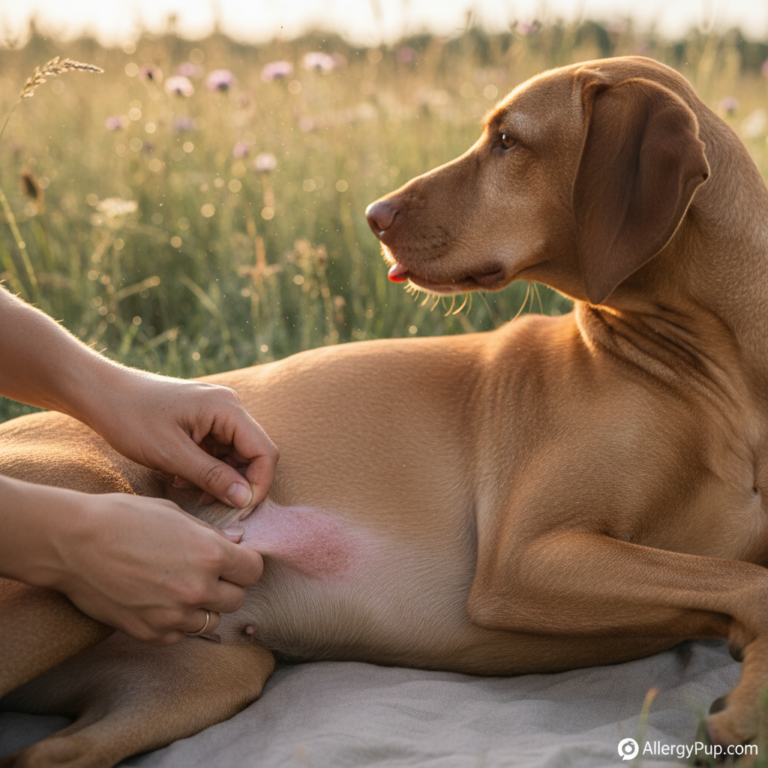
Demodex lesions in dogs show up as hair loss, crusty patches, inflamed skin. You’ll see them on the belly, paws, stomach area. The texture? Often feels scaly or leathery—raw inflammation underneath. Scratching makes it worse, of course. Then come secondary infections. And those infections? They complicate everything. Had one case where the owner thought it was just dry skin for eight months. Eight months. By then the poor dog’s whole face looked like hamburger.
What are the Diagnostic Nuances?
Really, it’s straightforward. Diagnosing Demodicosis means finding the mites via skin scrapings—a deep scrape pulls them from follicles. Some vets pluck hairs instead, looking at follicle debris under the scope. Works well enough. Techs hate doing them, honestly, but tough luck—you need those slides.
Important note: Outside the clinic, pet owners should monitor their dog’s overall health. Commonly overlooked signs like lethargy or changes in appetite can complement the diagnostic process. Sleepy dog, picky eater? Might not just be aging.
How is Demodicosis Treated?
1. Topical Treatments
Medicated shampoos or ointments reduce mite populations. Fast relief for inflamed skin, cuts down localized irritation. But here’s the thing: not all topical agents work across breeds. Be vigilant about that. Benzoyl peroxide washes open those plugged follicles—it’s messy and your bathroom will smell like a lab, but it helps. Choosing the right shampoo is essential and you can find expert tips on what dog shampoo is best for dogs with itchy skin.
2. Systemic Medications
For extensive infestations, ivermectin or milbemycin oxime are solid choices. Hits mites throughout the body—catches stubborn cases other stuff misses. Your vet will monitor side effects, especially in sensitive breeds (collies, I’m looking at you). I’ve lost count of owners who panic at the first week with no visible improvement. Give it time.
3. Managing Concurrent Infections
Bacterial infections on those lesions? Antibiotics step in. Tackle the mites and the infection at the same time. (Because treating only half the problem means you’ll be back in my exam room in three weeks.) And nasty stubborn-as-hell secondary bacteria—looking at you, staph—can make this drag out forever.
4. Environmental Management
Clean the living space—bedding, carpets, crates. Wash frequently, vacuum. Consider anti-parasitic treatments in high-traffic areas. Nine times out of ten, reinfestation happens because owners skip this step. One guy told me he washed the dog bed once. Once. Over six months. You can guess how well that went.
5. Boosting Immune Function

Better diet. Better overall health. The immune system does the heavy lifting—nutrition and supplements just give it an edge. Ask your vet what’s worth trying. Not everything labeled “immune-support” actually does anything useful. Omega-3s? Yeah, solid enough—check out my expert tips on how much Omega 3 for dogs with allergies. Overpriced gimmick flower extracts? Skip ’em.
A short note: Duration
Most dogs need 8+ weeks of treatment. Sometimes longer. I’ve seen cases drag for six months. Don’t panic if it’s not resolved in a month. From what I’ve seen in practice, the owners who obsessively take weekly progress photos do better—keeps ’em honest about the timeline.
Clinical Guidelines and Long-term Management
How Can You Prevent Recurrence?
Once it clears, it can come back. Clinical Standard: According to AVMA protocols, maintaining skin integrity and overall health is paramount. Balanced diet plus routine check-ups catch early problems before the wheels fall off. Look, some dogs just have crappy immune systems—we manage ’em, we don’t magic cure ’em.
What Should Be Monitored Long Term?
Skin condition. Report changes fast. Regular grooming? Good for early spotting of lesions or odd hair loss. Yearly dermatological check-ups aren’t overkill for at-risk breeds—especially Bulldogs and Boxers. Had a Boxer clear completely at twelve weeks, recur at eighteen months. Owner cried. We treated again, worked fine. That’s just how it goes sometimes.
Expert Summary
Demodex dogs deal with crappy mite infestations. Timely diagnosis, straightforward treatment, consistent prevention—that’s the routine. The whole thing hinges on solid collaboration with your vet, actually following protocols (not “I’ll try this for five days”), and keeping your dog’s overall health solid. Stick with it. Most cases resolve.